
Last updated November 15, 2026
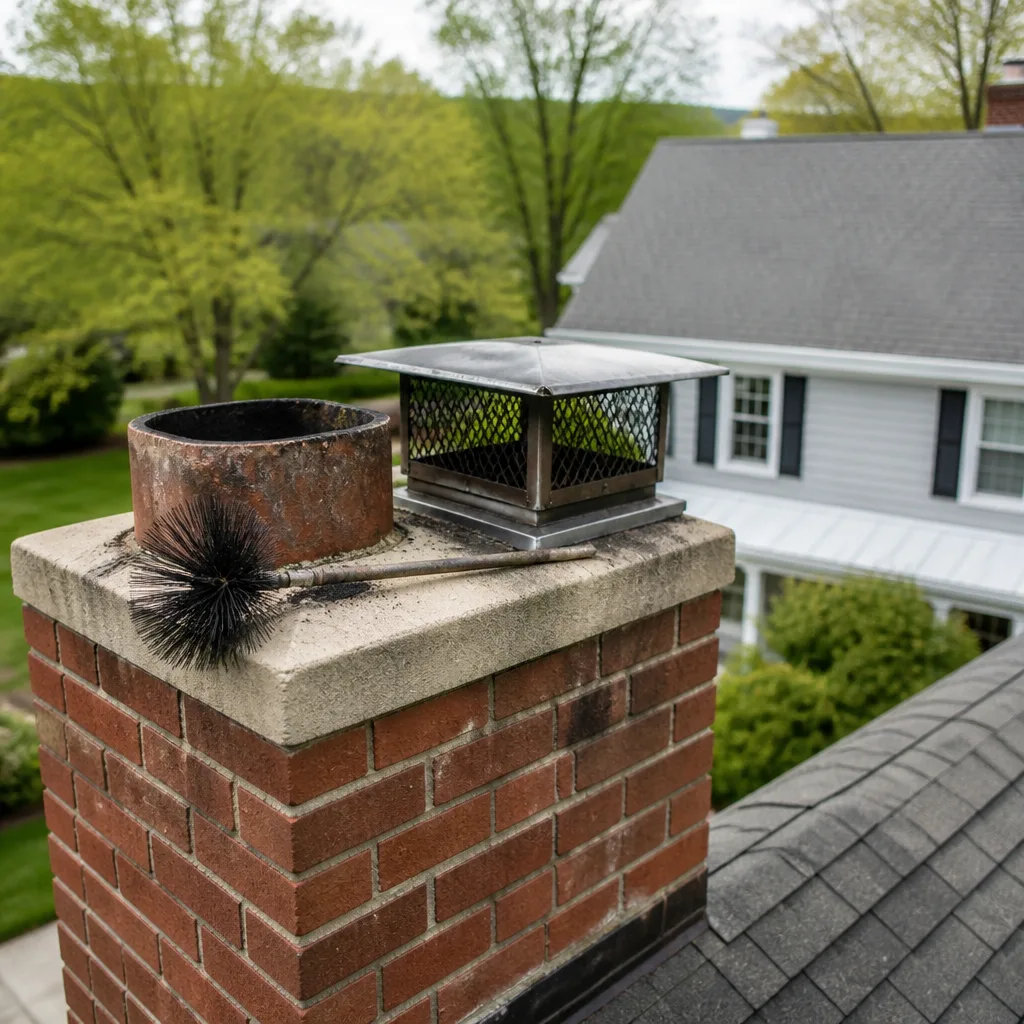 Sweep & inspection
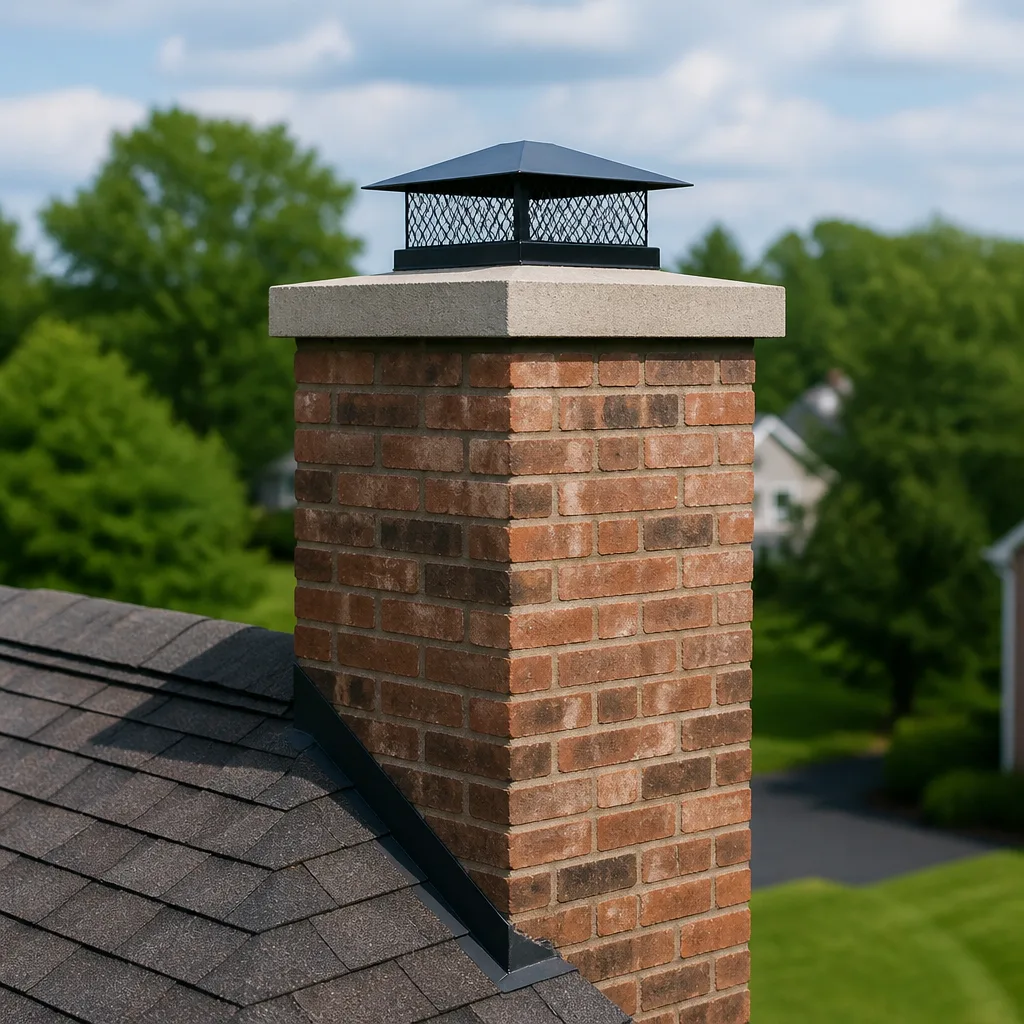 Caps & crowns
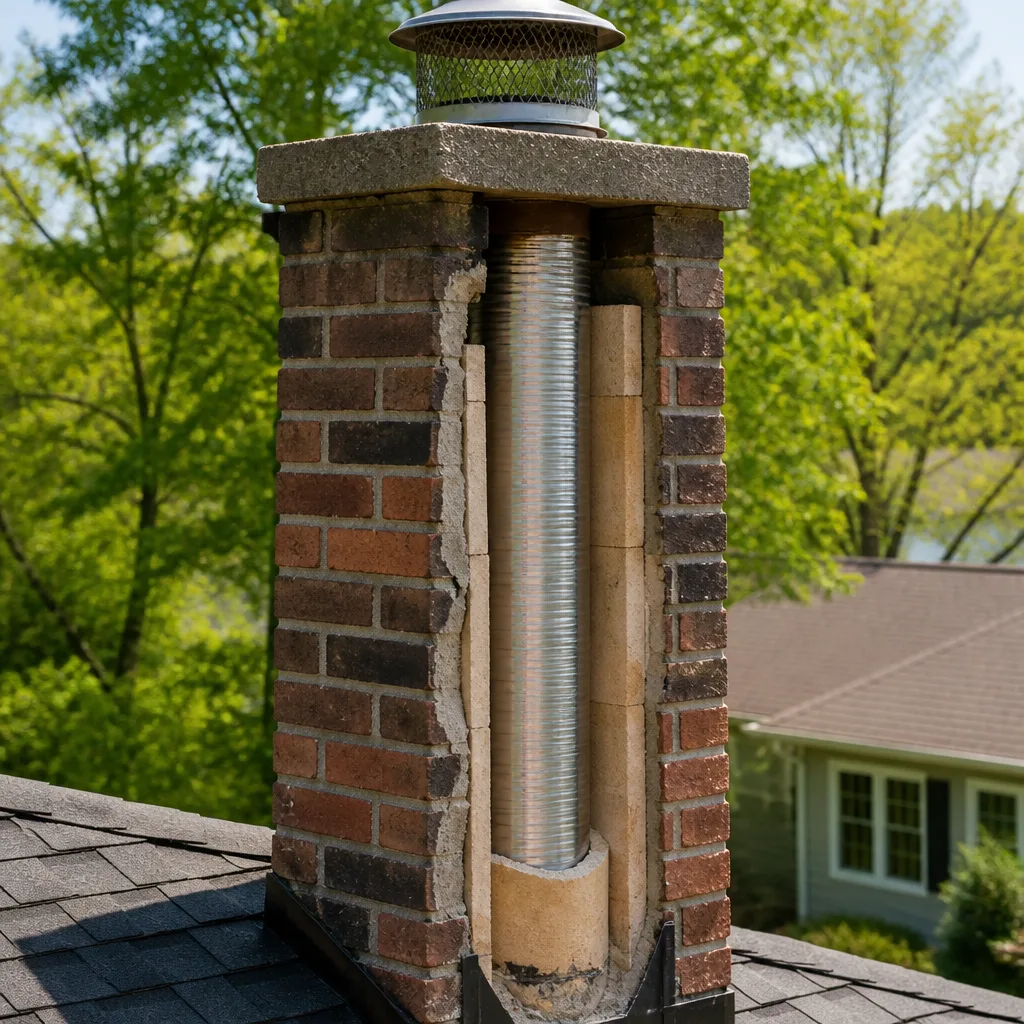 Flue relining
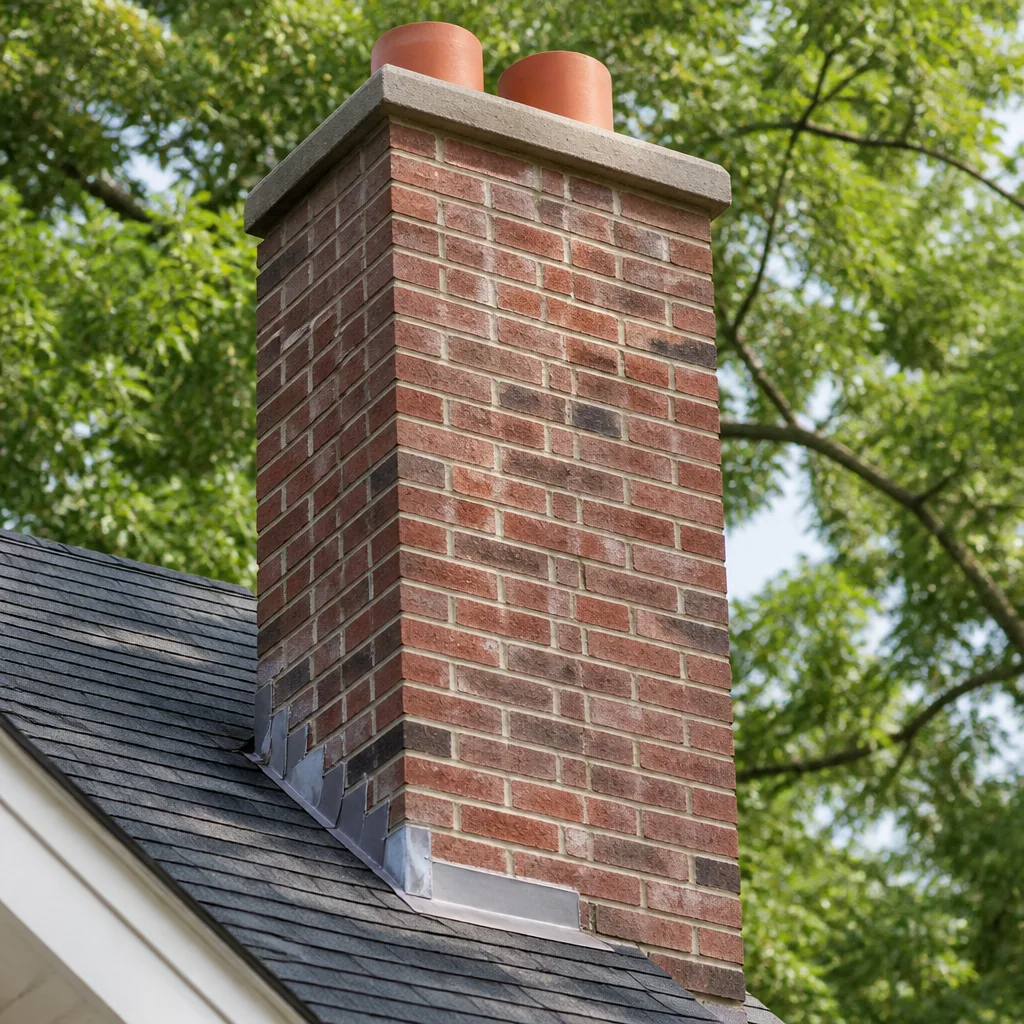 Masonry repair
 Gas fireplace service
Level 1 sweep and inspection to the NFPA 211 annual standard - flue, crown, cap, and flashing checked and photographed
Chimney sweep logs do not sweep chimneys. They loosen some creosote - which then falls where a brush and vacuum still have to collect it.
DIY vs Professional Chimney Cleaning: The Kent Homeowner’s Decision Guide
Most homeowners who ask whether they can clean their own chimney could physically do it. That’s the part nobody tells you. The brush fits, the rods turn, and soot comes down. The real question isn’t whether you’re capable. It’s whether your particular chimney – its flue type, its liner condition, and the way Kent’s damp winters have treated it – makes a DIY cleaning genuinely complete or just surface-clean. Those are different things, and the gap between them is where problems start. This guide walks you through which chimney setups make DIY reasonable, which make it inadvisable, and what a professional cleaning includes that a brush kit simply can’t.
Quick Answer
DIY chimney cleaning is reasonable for a straight, accessible flue in good condition with light soot and a recent professional inspection on record. It is inadvisable – regardless of your skill level – if your liner has an offset, visible cracks, glazed creosote, or no inspection in the past two years, because cleaning without inspection is incomplete maintenance. In Kent, where wet winters and a long burn season accelerate creosote buildup, the pro call usually comes down to whether your flue has been assessed, not whether you own a brush.
Styles & brands we work with
- Sweep & inspection
- Caps & crowns
- Flue relining
- Masonry repair
- Gas fireplace service
Table of Contents
- What DIY Cleaning Can and Cannot Do
- Which Flue Types and Chimney Configurations Suit DIY
- Cleaning Without Inspection: The Missing Half of the Job
- The Equipment Reality: What It Costs to Match Pro Results
- The Washington State Insurance Angle
- A Decision Matrix: DIY or Professional?
- What a Professional Cleaning Actually Includes in Kent
- Creosote, Moisture, and the Kent Burn Season
What DIY Cleaning Can and Cannot Do
A homeowner with a brush kit can remove loose soot and light creosote from a straight flue. That’s the honest scope. Brush kits sold at hardware stores are designed for accessible, straight runs in good condition. When your liner has an offset, a crack, or significant glazed creosote, the same kit doesn’t just fall short – it spreads debris in ways that create new problems, pushing soot into joints and ledges where it settles and stays.
Here’s what a proper cleaning covers that a homeowner brush cannot:
- Removal of glazed creosote. Stage-three creosote is a hard, tar-like deposit that a poly brush skips right over. It needs rotary tooling and, in many cases, a chemical treatment to break it down.
- Smoke chamber and damper inspection. The smoke chamber above the damper is where creosote collects out of sight. Most homeowners never look up there, and it’s one of the most common places a chimney fire starts.
- Liner assessment. Cracks, gaps, and deteriorated joints in a clay tile or metal liner are invisible from the firebox. Cleaning without checking the liner is cleaning the outside of a problem.
- Containment. Professional HEPA containment keeps soot out of your living space. A brush and a drop cloth don’t.
- A record. A written inspection report with photos is documentation. A homeowner with a brush has none.
If your flue is straight, sound, and was inspected recently, DIY cleaning of light soot is a reasonable stopgap. If any of those conditions fail, the brush isn’t the answer.
Which Flue Types and Chimney Configurations Suit DIY
The configuration of your chimney matters more than your willingness to climb a ladder. Some setups genuinely suit a homeowner brush. Others are inadvisable no matter how careful you are. Here’s the honest breakdown.
Configurations where DIY is genuinely reasonable
- Straight, vertical masonry flue with an intact clay tile liner. No offsets, no cracks, light soot only.
- Recently inspected. A professional inspection in the past year confirmed the liner and smoke chamber are sound.
- Light, dry, powdery soot. This means you’re burning seasoned wood and the creosote hasn’t moved past stage one.
- Easy roof access with a stable, safe working surface. No steep pitch, no fragile flashing, no reason to lean.
Configurations where DIY is inadvisable regardless of skill
- Any flue with an offset or bend. A straight brush can’t follow the curve; debris collects at the offset and the liner above it goes uncleaned.
- Visible cracks, spalling, or missing mortar in the liner. Brushing can knock loose material free and worsen the damage.
- Glazed or tar-like creosote. A poly brush won’t touch it. Rotary tooling and chemical treatment are needed.
- Metal liners with known joint issues. A brush can catch and separate sections. DuraFlex and similar systems need to be assessed, not forced.
- No inspection in two or more years. You’re cleaning a flue you haven’t looked inside.
- Any sign of prior chimney fire – cracked tiles, warped damper, puffy creosote. That’s a professional assessment, not a cleaning.
If you’re unsure which column your chimney falls into, that uncertainty is the answer. A professional chimney sweep includes the assessment. A homeowner brush doesn’t.
Cleaning Without Inspection: The Missing Half of the Job
Here’s the part most DIY guides skip. Cleaning and inspection are two separate jobs, and doing one without the other leaves you with half the maintenance. A chimney can look clean from the firebox and still have a cracked liner, a deteriorated smoke chamber, or failing firebox joints – all of which a brush can’t see and none of which a cleaning fixes.
What cleaning alone cannot tell you:
- Liner integrity. Cracks in a clay tile liner or separated joints in a metal liner let heat and combustion gases reach the structure around the chimney. That’s a fire risk and a carbon monoxide risk.
- Smoke chamber condition. The corbelled section above the damper is prone to cracking. A damaged smoke chamber lets creosote accumulate in places that are hard to reach and easy to ignite.
- Firebox joint deterioration. Failed mortar joints in the firebox are a structural issue that a sweep alone won’t surface.
- Chimney cap and crown condition. A missing or damaged cap lets rain and animals in – and in Kent, rain is a reliable visitor.
This is why we treat inspection as a standalone service, not an upsell. An inspection is what tells you whether the cleaning was enough or whether something underneath needs attention. Without it, you’ve removed soot and learned nothing about the flue’s condition. When a liner does show damage, we assess whether chimney repair with HeatShield resurfacing can restore it before recommending a full reline. That decision depends entirely on what the inspection found.
The Equipment Reality: What It Costs to Match Pro Results
The brush kit on the shelf is the cheap part. Matching professional-grade results is a different investment, and it’s worth seeing the full list before you decide the DIY route saves money.
To genuinely match a professional cleaning, a homeowner would need to buy or rent:
- Rotary chimney tooling for glazed creosote – not a hand brush.
- A HEPA vacuum rated for soot containment so the cleaning doesn’t redistribute fine ash through your living space. Household vacuums aren’t built for this and can blow soot back into the room.
- A full rod set long enough for your flue height, plus spare brush heads in the correct diameter.
- A camera capable of inspecting the liner and smoke chamber after cleaning, or the willingness to pay separately for an inspection.
- Drop cloths rated for fine soot and proper respiratory protection.
- Roof safety equipment – a stable ladder, harness, and the working surface condition to use them safely.
Add it up and the tooling cost typically meets or exceeds a single professional cleaning, and you still don’t have the inspection, the camera report, or the judgment to interpret what the camera shows. That’s the honest economics. The equipment isn’t the expensive part of the job – knowing what you’re looking at is.
We specify professional-grade materials for every job: HeatShield for resurfacing, DuraFlex for relining, and Copperfield and Gelco components for caps and venting matched to specific flue configurations. That’s not a sales line. It’s the difference between a repair that lasts and a repair that gets called back.
The Washington State Insurance Angle
This is the question most homeowners don’t ask until after something goes wrong: if a chimney fire happens and you’ve been cleaning the chimney yourself, does your homeowners insurance still cover it? The honest answer is that it depends on your policy, but the presence or absence of professional inspection records is a real factor in how a claim is reviewed.
Most Washington homeowners policies require reasonable maintenance, and many ask for documentation of chimney maintenance when a chimney-related claim is filed. A self-cleaned chimney with no inspection on record isn’t proof of neglect – but it’s also not proof of maintenance. The gap can complicate a claim.
What a professional record gives you:
- A dated inspection report with photos showing the flue’s condition at a point in time.
- A written cleaning record confirming the chimney was serviced.
- Documentation of any recommended repairs, which shows you acted on professional advice.
We can work with your insurer when documentation is needed, and we’re glad to provide inspection reports for real estate transactions or insurance requirements. That paper trail is one of the practical reasons many Kent homeowners schedule an annual inspection even when they plan to do light cleaning themselves.
A Decision Matrix: DIY or Professional?
Use this as a starting point. Four inputs: chimney age, last professional inspection date, fuel type, and visible condition. Answer each honestly, then follow the direction.
| Input | Favors DIY | Favors Professional |
|---|---|---|
| Chimney age | Newer construction, known liner type, no history of issues | Older masonry, unknown liner, prior repairs |
| Last professional inspection | Within the past 12 months, flue confirmed sound | Two or more years ago, or never |
| Fuel type | Seasoned hardwood, dry storage, light use | Green or unseasoned wood, frequent burns, gas or oil appliance |
| Visible condition | Light powdery soot, intact cap, no cracks | Glazed creosote, cracked tiles, warped damper, water staining, animal debris |
If all four point to DIY, a homeowner cleaning of light soot is reasonable – and schedule an inspection to keep the record current. If any two or more point to professional, book the sweep. The matrix is designed to be conservative: when the inputs are mixed, the professional call is the safer one.
What a Professional Cleaning Actually Includes in Kent
A professional cleaning in Kent isn’t just brushing. It’s a sequence, and each step matters.
- Set up containment. HEPA vacuum and drop cloths protect your living space from fine soot before the brush goes in.
- Clean the flue. Correct-diameter brushes and rotary tooling where glazed creosote is present.
- Clean the firebox, smoke chamber, and damper. The smoke chamber is where creosote hides and fires start.
- Inspect with a camera. Liner, joints, smoke chamber, cap, and crown – photographed and documented.
- Explain what we found. Photos, a plain-language explanation, and your options. Then you decide.
- Recommend, don’t pressure. If the flue is sound, we say so. If a repair can safely wait, we tell you that too.
Every cleaning includes the inspection and photo report. We show you what we find – not a verbal summary, but images you can look at and ask questions about. That’s the standard a Chimney Sweep Kent job is held to, and it’s why homeowners use the inspection as a record for insurers, real estate, and their own peace of mind. Our technicians have up to experience, and the three disciplines – sweep, repair, and inspection – are handled by the same company, so nothing gets handed off mid-project.
Creosote, Moisture, and the Kent Burn Season
Kent’s climate shapes chimney maintenance more than most homeowners realize. Wet winters and a long shoulder season mean wood stays damp longer and burns cooler, and cooler burns produce more creosote. That’s a climate fact, not a scare line, and it’s the reason an annual sweep before the burn season starts makes practical sense here.
What local conditions mean for your chimney:
- Wood stored outdoors absorbs moisture through Kent’s wet months. Damp wood burns inefficiently and leaves more creosote.
- Extended burn seasons mean more total hours of use, which accumulates deposits faster than a short-season burn.
- Frequent temperature swings stress masonry and can widen existing cracks.
- Rain intrusion through a missing or damaged cap degrades the flue and the firebox over time. A properly fitted cap, matched to your flue configuration, is one of the simplest protections available.
The practical takeaway: in Kent, creosote builds faster and moisture damage is a real factor, so the two-year inspection interval many homeowners stretch to is too long here. A sweep before the burn season, plus a documented inspection, keeps you ahead of both. It’s also why we lean on professional-grade liner materials – a HeatShield-resurfaced flue, or a DuraFlex liner where resurfacing can’t do the job, holds up better to the local moisture cycle than a repaired-but-tired liner.
Common Mistakes to Avoid
- Cleaning without inspecting. You remove soot and learn nothing about the liner, smoke chamber, or firebox joints. It’s half the job dressed up as all of it.
- Believing a straight brush handles glazed creosote. Stage-three creosote is tar-hard. A poly brush skips over it and the deposit stays put.
- Skipping HEPA containment. Household vacuums can blow fine soot back into your living space. So is the whole room, not just what’s on the drop cloth.
- Dismissing water staining as cosmetic. In Kent’s wet climate, staining at the flue or firebox often signals a cap or crown issue that will get worse.
- Cleaning a flue that’s never been inspected. If you don’t know the liner condition, brushing can knock loose material free and worsen existing damage.
- Assuming a sound-looking firebox means a sound flue. The visible part of the chimney isn’t the part that fails. Cracks and joint separation live in the liner and smoke chamber.
- Relying on DIY cleaning for an insurance record. A dated, photographed professional inspection carries documentation a homeowner brush cannot.
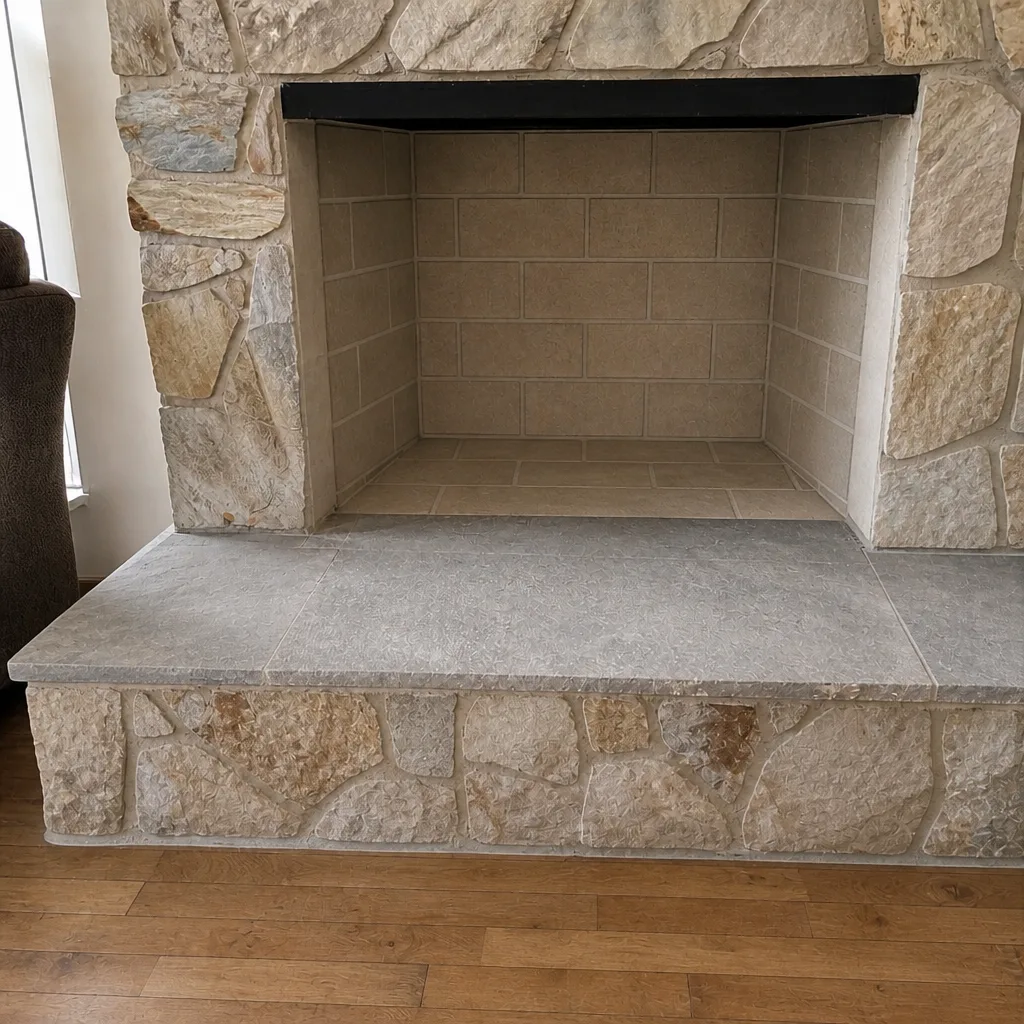
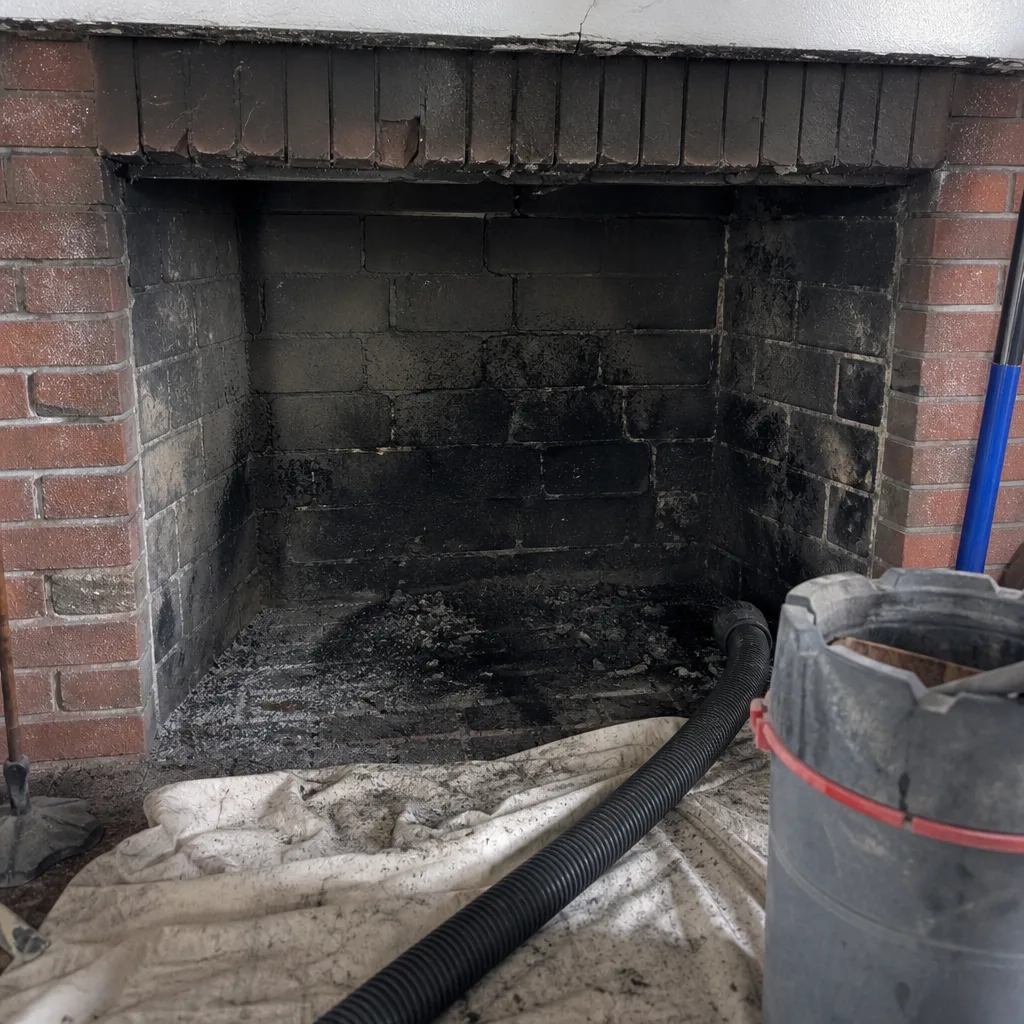
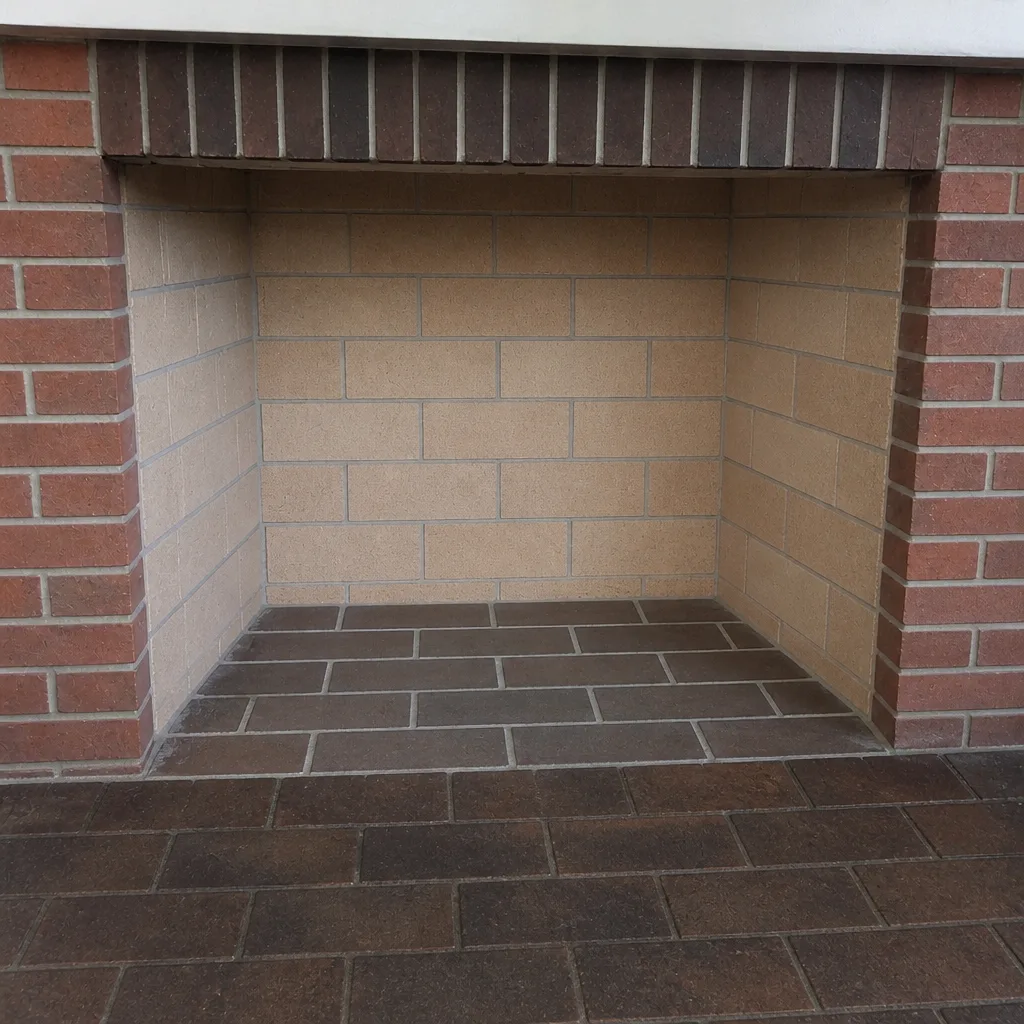
See the difference
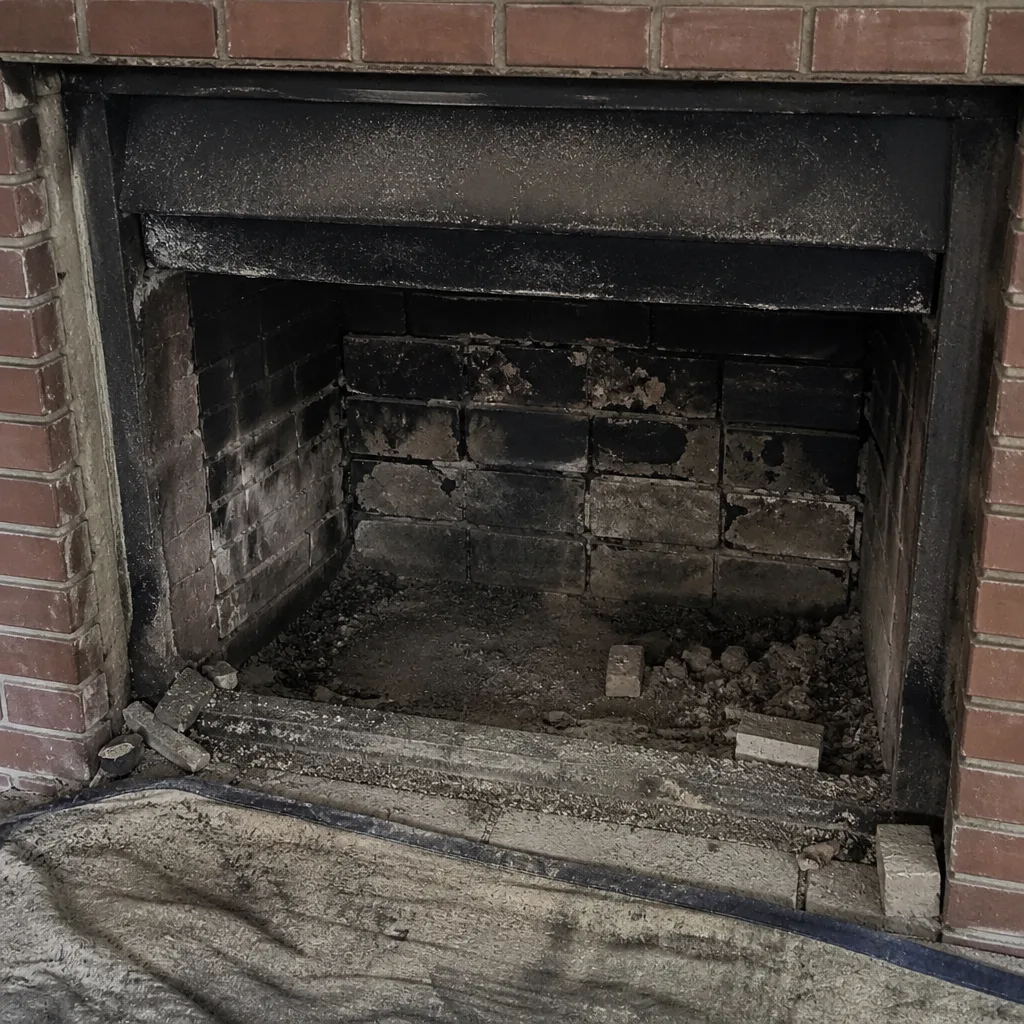 Before
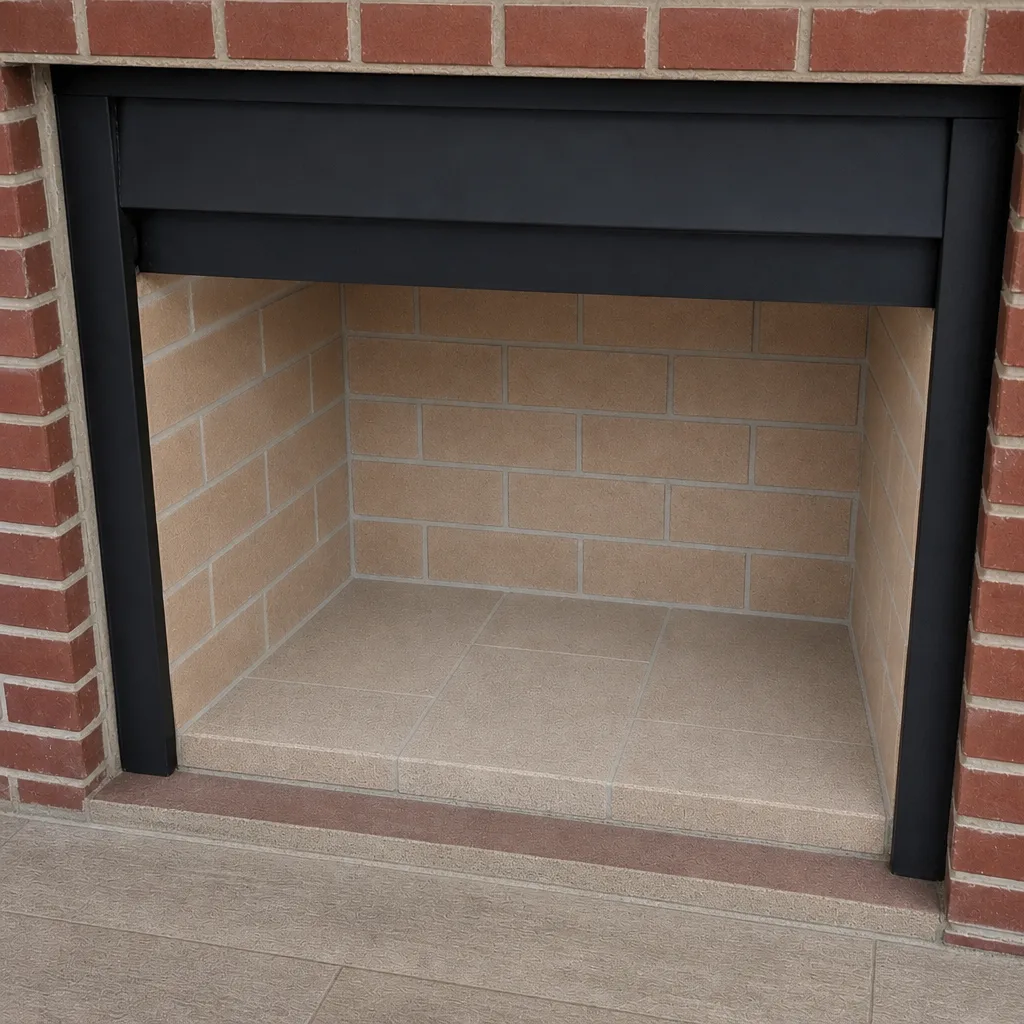 After
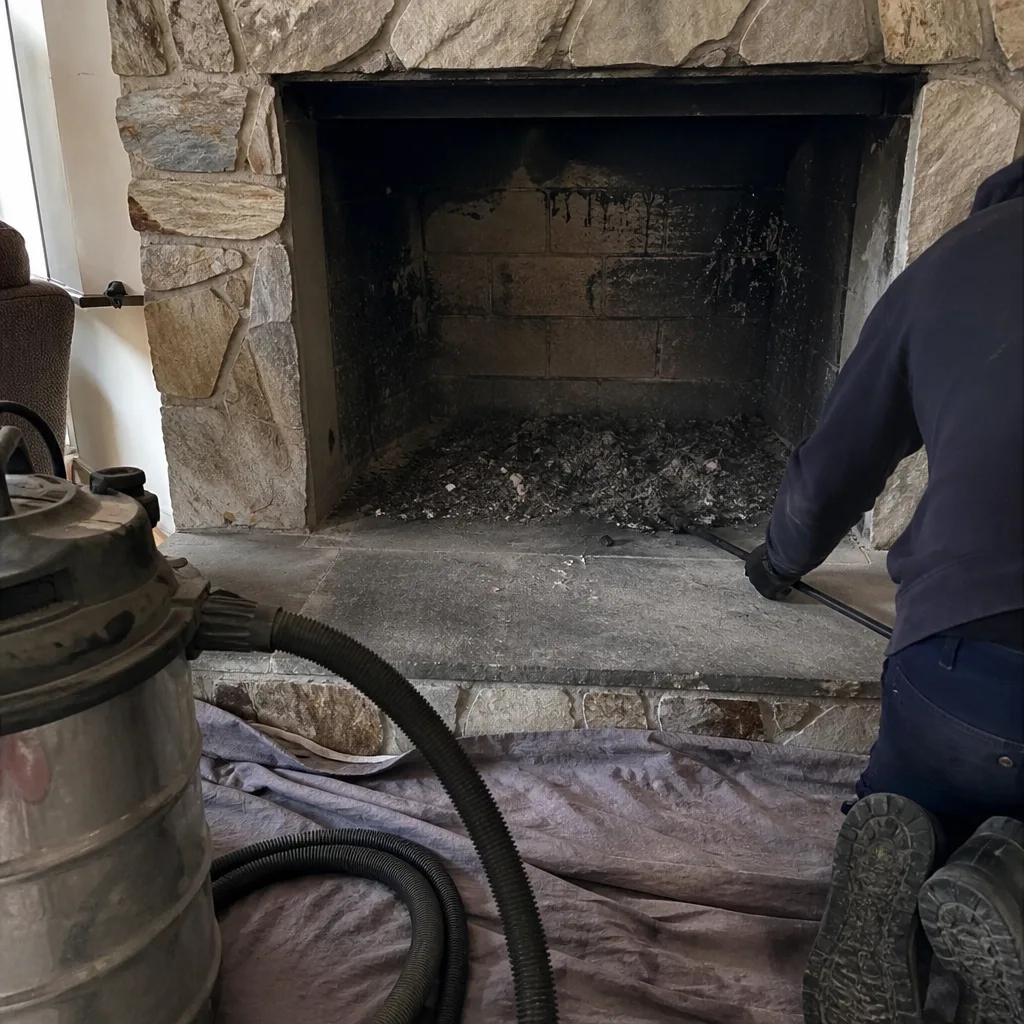 Before
 After
 Before
 After
When to Call a Professional
Call a professional if any of these applies: your flue has an offset or a bend; you see glazed or tar-like creosote; your liner shows cracks or missing mortar; the damper is warped or stiff; you’ve had no inspection in more than two years; you burn green or unseasoned wood; you have a gas or oil appliance vented through the chimney; or you’re buying, selling, or insuring a home and need documentation. Also call if you’ve never had the chimney professionally inspected, even if you plan to keep cleaning it yourself – the inspection is what tells you whether DIY is safe. Chimney Sweep Kent offers free estimates in Kent – call (866) 942-7714. We answer 24/7. Fast dispatch from 7am to 7pm, Sunday through Friday. Nothing is recommended without camera evidence you can see for yourself, and we’ll tell you plainly when work can safely wait.
Frequently Asked Questions
It depends on your flue, not your ability. If your chimney has a straight, intact liner, light soot, and a professional inspection within the past year, DIY cleaning of the soot is reasonable. If the flue has an offset, visible cracks, glazed creosote, or no recent inspection, a professional sweep is the right call regardless of skill. Call (866) 942-7714 for an exact quote – estimates are free.
It can complicate a claim if there’s no professional inspection on record, because many policies expect documentation of maintenance. A dated inspection report with photos gives you a paper trail a homeowner brush cannot. We can work with your insurer when documents are needed. Call (866) 942-7714 to book an inspection.
Often it can be repaired. HeatShield resurfacing restores many cracked flue liners without a full reline, using a non-invasive method most sweep-only companies can’t offer. A full DuraFlex reline is specified only when resurfacing alone won’t hold. We assess the liner with a camera before recommending either, and nothing is recommended without evidence you can see. Call (866) 942-7714 for a repair assessment.
Once a year before the burn season is the working standard here, with a professional inspection alongside it. Kent’s wet climate and long burn season build creosote faster than drier, shorter-season areas, so a two-year interval often leaves too much deposit by the time it’s cleaned. Call (866) 942-7714 to schedule a sweep.
Creosote builds, and when it reaches a tar-like stage it becomes a real fire risk in the flue. A cracked liner, left unassessed, can also let combustion gases reach the structure – that’s the carbon monoxide concern. Skipping cleaning and inspection doesn’t create an instant hazard, but it removes the information you’d need to catch one. Call (866) 942-7714 for a free estimate.
We handle both, plus inspection, as three disciplines under one company – no referrals and no gaps in accountability. We work with professional-grade brands including HeatShield, DuraFlex, Copperfield, and Gelco for the components that suit your flue. Call (866) 942-7714 and we’ll quote the full scope.
The Bottom Line
DIY chimney cleaning isn’t a capability question – it’s a fit question. A straight, intact, recently inspected flue with light soot is a reasonable candidate for a homeowner brush. An offset flue, cracked liner, or glazed creosote makes DIY cleaning inadvisable no matter how careful you are, because the brush can’t do the job and can’t tell you what it couldn’t reach. Cleaning without inspection is half the maintenance, and in Kent’s moisture-heavy climate that gap closes slowly and then catches up fast. If you use your fireplace as a real heat source, the documented inspection is worth more than the saved brush work. For a chimney sweep that includes the inspection, the camera report, and a repair path if you need one, we’re glad to help. Reach the team in Kent to get started.
Call (866) 942-7714 for a free estimate. We answer 24/7. Fast dispatch from 7am to 7pm, Sunday through Friday.
Written by the team at Chimney Sweep Kent.